
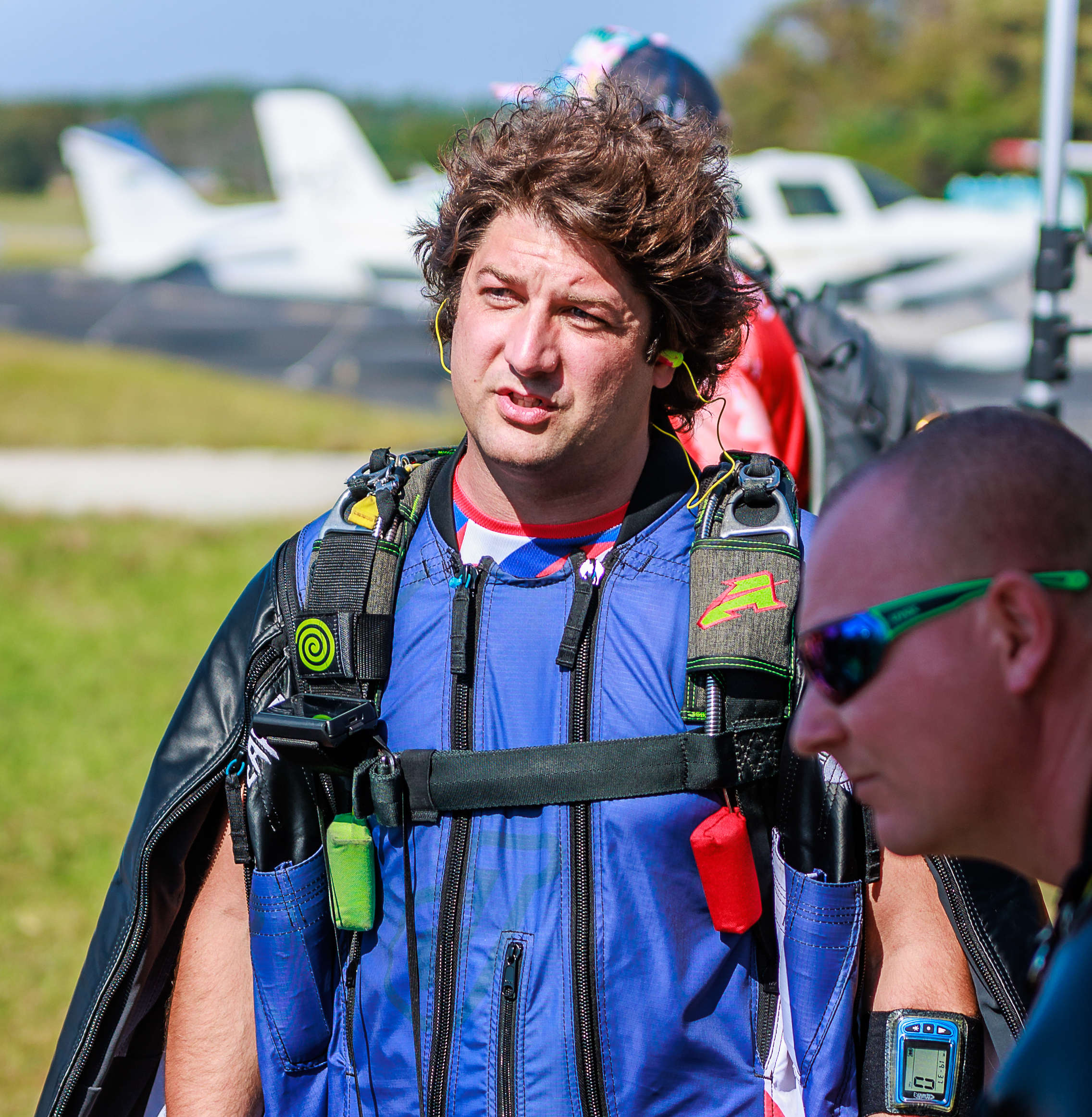
When it comes to wingsuiting, the flight doesn’t begin at the door—it begins the moment you step onto the aircraft. Understanding how to move, sit, and interact within the plane isn’t just about comfort—it’s about efficiency, safety, and maintaining good relations with the rest of the skydiving community. This article outlines key considerations for wingsuiters inside the plane, with insights from experienced jumpers and pilots alike.
1. The Space Dilemma: Maximising Comfort Without Hogging It
Wingsuiters take up more space—there’s no way around it. But managing that space thoughtfully makes a massive difference. On full lifts, especially when packing 14+ jumpers into smaller aircraft like a Caravan, strategic sitting is key. Instead of facing each other, which can waste space in cramped conditions, it’s often better for everyone to sit in the same direction, knees extended, and rigs stacked carefully.
By doing this:
- You minimise wasted loft above your shoulders.
- You avoid encroaching on neighbouring jumpers.
- You reduce pressure on DZO/operators to surcharge wingsuiters for the additional space we inevitably consume.
And let’s not forget—inefficient seating might limit the number of tandems that can fit on the load. If tandems are bumped due to space, you can bet that wingsuiters will be the first to get side-eyed by manifest.
Pro tip: Sit back as far as possible with your rig lifted slightly by the person behind you. This alone creates vital space for everyone involved.
2. Know Your Aircraft Configuration
Not all aircraft are created equal. The type of aircraft—and even the pilot flying it—can significantly affect your exit.
Key aircraft considerations:
- Tail height: A low tail means more risk during exit. If the aircraft is flying slow or pitched up, the tail could be dangerously close. If in doubt, ask the pilot to slightly lower the nose or increase airspeed gently to lift the tail.
- Flaps: Proper flap deployment raises the tail and gives wingsuiters more room to exit cleanly. Always check flap settings—visually from the door if needed. If flaps are retracted, it’s not safe to go. Speak up.
The red light isn’t just decoration
In a disciplined load:
- Red light = open the door, check spot, assess tail clearance, verify flap settings.
- Green light = you’re good to go.
The green light isn’t the moment to begin thinking about configuration—it’s the signal that everything should already be checked.
Be aware: The above light configuration maybe common in the UK but do always check this, it should be in the DZ brief.
3. Communicating with the Pilot
A lot rests on pilot experience and awareness. Some are very wingsuit-savvy; others, less so. Don’t assume they know what’s needed.
Important cues to communicate:
- Flap setting required (typically 20–30% for better tail clearance).
- Exit timing and speed – request slight descents (e.g. 200 feet per minute) or specific speeds if needed.
- Offset direction for jump run based on prevailing winds. We fly, not fall. So while freefallers have drift, we navigate—and our track must be accounted for.
If your pilot is new or unfamiliar with wingsuits, consider a pre-jump briefing. Explain things like angle of attack, the need for clean air behind the tail, and safe flap positions.
4. Group Separation: Time and Ground Speed
Wingsuiters tend to obsess less about time-based separation because we’re not falling vertically like belly or freefly groups—but we still need to be aware.
- Standard rule of thumb: 300 metres (approx. 6–8 seconds) between groups, based on ground speed. In low wind conditions, this might tighten. In high ground speed, you’ll need more.
Key tip: If you’re leading a group, be the one to check the spot and the aircraft configuration before exit.
5. Navigating the Jump Run
Remember, we’re navigating horizontally. Strong winds will affect our true course—especially if we don’t account for drift. Understanding the difference between heading and actual track over the ground is essential.
Example:
- A southerly wind with a left bank turn might push you off heading and change your track far more than expected.
- If you turn right in the same conditions, the result will differ drastically. The wind alters your arc.
Wingsuit navigation is dynamic—so understanding the wind conditions, planned jump run heading, and offset are all crucial to not ending up miles from your intended flight path.
Final Thoughts
As wingsuiters, we often operate on the edge of what’s possible—tight exits, complex formations, and high-performance suits. That makes it even more important to be the most disciplined and thoughtful athletes on the aircraft.
- Be spatially aware.
- Know your aircraft.
- Communicate with your pilot.
- Look after your fellow jumpers.
If we do that, not only do we keep ourselves safe—we also make wingsuiting more respected and sustainable in every dropzone we fly from.